
ChatGPT Family Podcasts Spark Privacy Debate After Sam Altman Suggestion
 HalloTokoh
August 4, 2026 4:56 am
.
7 min read
HalloTokoh
August 4, 2026 4:56 am
.
7 min read
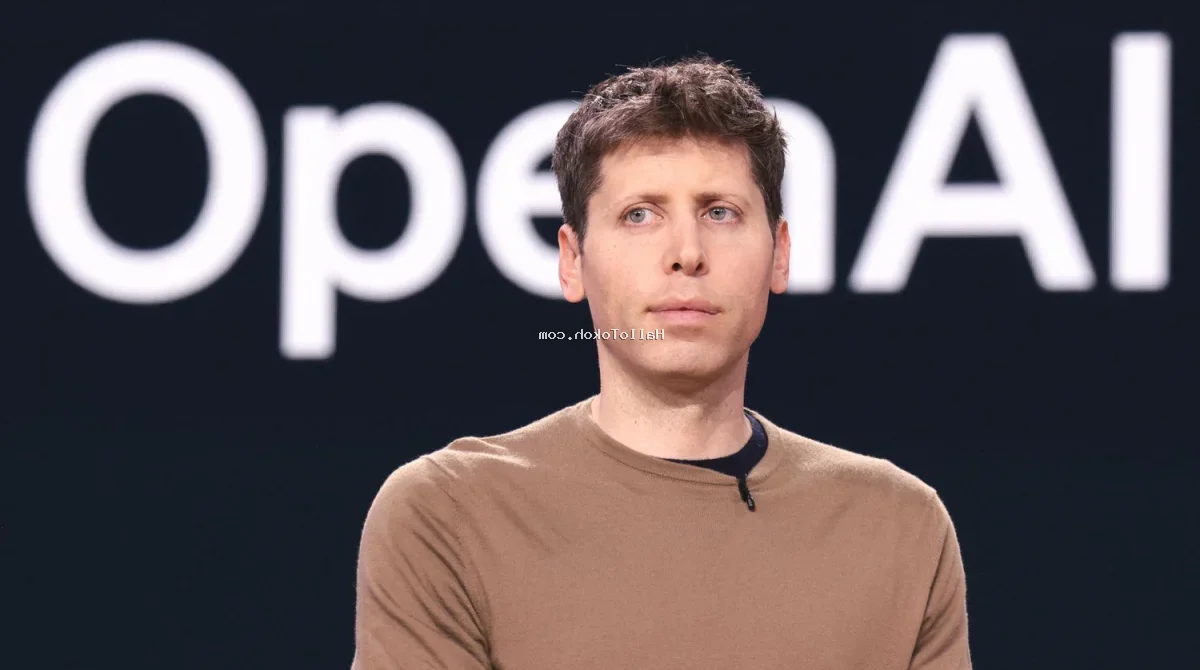
HalloTokoh – ChatGPT Family Podcasts Spark Privacy Debate After Sam Altman Suggestion turns out to hold a unique story that’s exciting to follow. Hello buddy! It feels awesome to share insights with you at HalloTokoh.com. Grab a hot cup of coffee or lean back while you read along.
To broaden your knowledge and stay updated among your peers, Let’s observe together how ChatGPT Family Podcasts Spark Privacy Debate After Sam Altman Suggestion actually plays out. This point will certainly be useful for your daily life.
Let’s take a look together, check out the array of facts waiting down below. Take a look below!
Poin Utama Berita Ini:
- OpenAI CEO Sam Altman suggests parents use ChatGPT to generate personalized AI podcasts about their children’s daily lives.
- The proposed method requires connecting family calendars and sharing sensitive personal interests with the artificial intelligence chatbot.
- The suggestion has drawn significant criticism from internet users, privacy advocates, and figures like Gravity Falls creator Alex Hirsch over child privacy and human connection.
Dilansir dari laporan yang diterbitkan oleh Tech4Gamers, OpenAI CEO Sam Altman continues to push the boundaries of generative artificial intelligence with ChatGPT, while frequently offering provocative ideas regarding its practical applications. Following previous speculation about artificial intelligence eventually evolving into a wish-granting genie, Altman recently shared a proposal that parents should leverage the chatbot to generate dedicated podcasts about their kids. While presented as a creative modern storytelling method, the concept has instantly ignited a fierce public discourse surrounding childhood privacy, data consent, and the irreplaceable value of genuine human interaction within modern households.
The core premise of Altman’s proposal involves integrating family schedules and personal milestones directly into the artificial intelligence ecosystem. By connecting family calendars and feeding specific details about children’s hobbies, upcoming birthdays, or recent sports matches into the system, ChatGPT could theoretically synthesize custom audio content. This audio generation would cater specifically to both parents and children, turning everyday mundane routines into serialized narrative summaries. However, this level of data integration immediately triggers alarm bells for privacy experts who monitor how personal family information is harvested and stored by large language models.
Understanding the Mechanics of AI-Generated Family Content
The workflow envisioned for generating these family-centric podcasts relies on continuous data input from everyday household activities. Parents would act as content curators, feeding the artificial intelligence chatbot with chronological updates derived from shared digital calendars and personal observations. For instance, if a child participates in a weekend football match or prepares for an academic milestone, these occurrences would be logged into the prompt history. The underlying artificial intelligence infrastructure would then process these textual inputs to construct engaging, spoken-word summaries designed to mimic professional podcast broadcasts.
Proponents of advanced consumer technology often view such features as innovative tools for memory preservation and family bonding. In an era where working parents struggle to find uninterrupted quality time, automated storytelling tools might seem like a streamlined approach to acknowledging children’s daily achievements. Nevertheless, the technical reality requires handing over intimate details about minors to cloud-based servers managed by corporate entities. This operational requirement transforms routine family life into computational data points, creating a permanent digital footprint for children long before they reach an age where they can consent to such exposure.
Privacy Concerns and Immediate Public Backlash
The public reaction to Altman’s suggestion was swift and overwhelmingly skeptical. Critics immediately pointed out that connecting family calendars and personal children’s data to an artificial intelligence chatbot violates fundamental boundaries of minor privacy. Because generative artificial intelligence models continuously learn from user interactions, sharing granular details about a child’s daily whereabouts, school schedules, and personal preferences introduces severe security vulnerabilities. Families constantly battle against data harvesting practices, making the voluntary uploading of children’s personal narratives an alarming proposition for cybersecurity advocates.
Furthermore, the suggestion drew sharp satirical remarks and direct criticism from notable public figures. Gravity Falls creator Alex Hirsch responded to the proposal with a blunt observation, asking what happened to the traditional approach of simply talking to one’s children. This sentiment resonated deeply across social media platforms, amplifying a broader societal anxiety that technology executives are increasingly promoting digital substitutes for organic human relationships. Critics emphasized that raising children requires emotional nuance, active listening, and face-to-face communication elements that artificial intelligence algorithms simply cannot replicate.
The Irony of Artificial Intelligence Parenting Advice
Adding another layer to the ongoing discussion is the revelation that Sam Altman himself is a parent who frequently relies on conversational artificial intelligence to navigate the complexities of raising his own son. The OpenAI chief executive has previously acknowledged consulting the chatbot for parenting advice and operational guidance in domestic matters. This personal reliance on algorithmic assistance highlights a growing cultural divide between tech industry leaders who view artificial intelligence as a natural extension of daily parenting and everyday consumers who remain deeply cautious about technological encroachment into private family spaces.
Despite these high-profile endorsements, OpenAI’s own terms of service and safety disclaimers explicitly state that the technology is not designed or intended for unsupervised use by children. Critics were quick to highlight this contradiction, noting the hypocrisy of marketing or recommending a platform as a family storytelling medium while simultaneously maintaining strict age and usage boundaries within official corporate policy documents. The juxtaposition between corporate safety disclaimers and casual executive suggestions leaves consumers confused regarding the true intended boundaries of generative artificial intelligence tools.
Broader Implications for Consumer Technology and Family Life
The controversy surrounding AI-generated family podcasts reflects a wider, ongoing struggle within the consumer technology sector regarding how deeply artificial intelligence should integrate into personal domestic environments. As companies race to find sticky use cases for large language models, pushing into intimate family spaces represents the next frontier for user engagement. However, families are increasingly pushing back against the normalization of pervasive data tracking, demanding stricter legal protections and clearer boundaries regarding how children’s digital identities are managed.
| Aspect | Proposed AI Use Case | Public and Expert Concern |
|---|---|---|
| Data Input | Family calendars and daily children’s events | Exposure of sensitive personal schedules and locations |
| Content Output | Personalized audio podcasts for parents and kids | Creation of permanent digital footprints for minors without consent |
| Parental Interaction | Automated storytelling and behavioral advice | Diminished human connection and reliance on algorithms |
As the debate moves forward, the pressure remains on technology developers to balance innovative capability with rigorous ethical standards. While automated tools will undoubtedly continue to evolve, the public response to Altman’s suggestion demonstrates that consumers draw a distinct line when it comes to the privacy and emotional welfare of their children. The conversation serves as an essential reminder that just because an artificial intelligence application is technically feasible does not mean it represents a healthy or socially acceptable addition to family life.
Disclaimer: This article is written based on reports regarding public statements made by technology executives. Readers are advised to review platform privacy policies and exercise caution when sharing personal family data with third-party digital tools. Learn more about artificial intelligence developments directly from industry leaders at OpenAI.
Referensi Sumber: Tech4Gamers – Sam Altman Says Parents Should Use ChatGPT For AI Podcasts About Their Kids
And that summary on ChatGPT Family Podcasts Spark Privacy Debate After Sam Altman Suggestion concludes our conversation today, guys. Turns out it’s not as confusing as we initially thought, right? Small steps taken today will make a huge difference down the line.
Don’t keep those great ideas to yourself, folks, pour out all your thoughts in the comment section, guys. It keeps our small team at HalloTokoh.com inspired to post more.
Signing off for now, don’t forget to stay happy, hope your day shines bright with great achievements!
Editorial Team: HalloTokoh.com Team
Author: Mss. Mafa