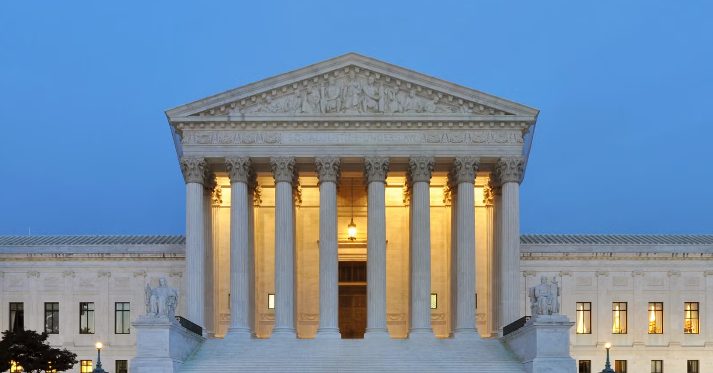

US Supreme Court Rules Geofence Warrants Are Searches Under the Fourth Amendment
 HalloTokoh
June 30, 2026 3:04 pm
.
4 min read
HalloTokoh
June 30, 2026 3:04 pm
.
4 min read
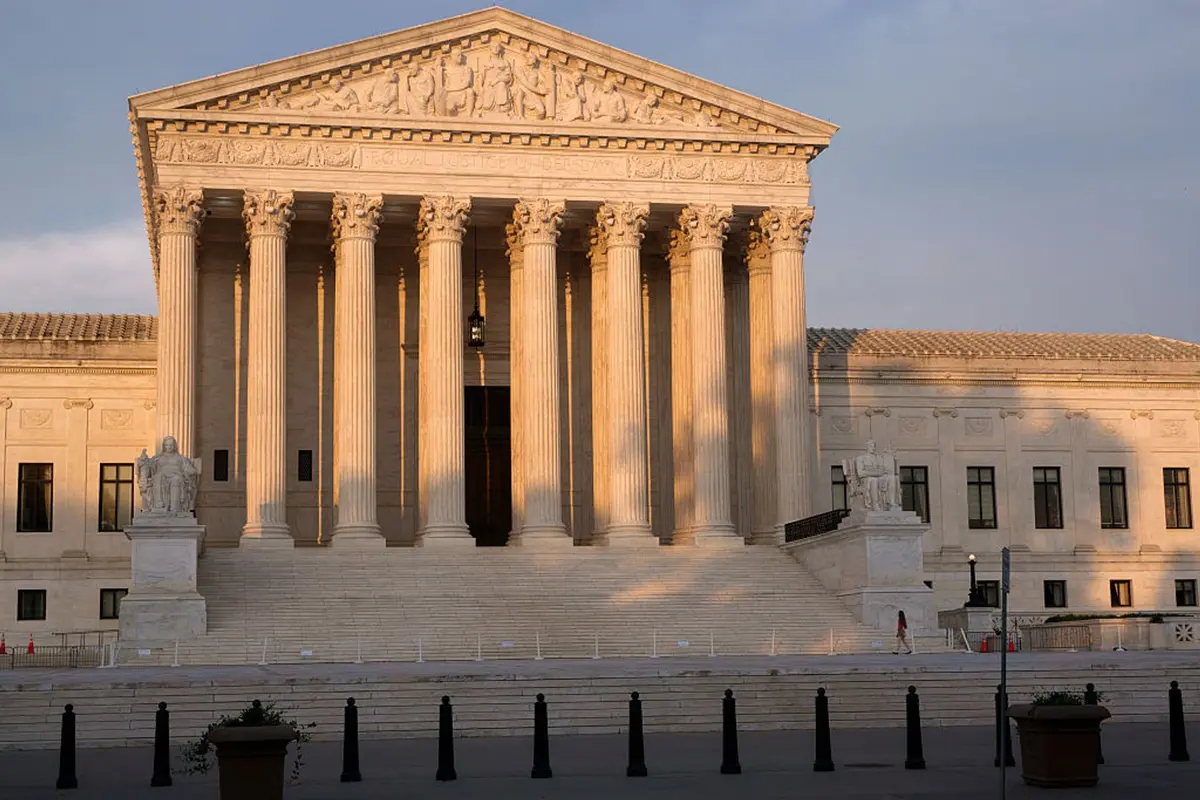
US Supreme Court Rules Geofence Warrants Are Searches Under the Fourth Amendment
The U.S. Supreme Court has issued a landmark decision that could reshape how law enforcement agencies use digital location data during criminal investigations. In a 6-3 ruling, the court concluded that police conduct a “search” under the Fourth Amendment when they obtain cellphone location information through a geofence warrant, even if the data is collected from a third-party technology company.
The decision represents one of the most significant privacy rulings involving digital technology in recent years and highlights the growing tension between public safety investigations and individual privacy rights.
Case Originated From a 2019 Bank Robbery
The case stems from the investigation of a bank robbery that occurred outside Richmond, Virginia, in 2019. After an armed suspect stole nearly $200,000 from a federal credit union, investigators had few immediate leads.
To identify possible suspects, law enforcement requested a geofence warrant requiring Google to provide anonymous location records from devices that had been near the bank during the time of the robbery.
Google initially supplied anonymized identifiers for multiple devices located within the designated area. Investigators then narrowed the list before requesting account details connected to several devices. One of those accounts belonged to Okello Chatrie, who later became the primary suspect.
Based on the location information, investigators obtained additional search warrants, recovering cash, a firearm, and other evidence linked to the robbery.
What Is a Geofence Warrant?
Unlike traditional search warrants that target a known individual, a geofence warrant focuses on a geographic area and a specific time period.
Technology companies are asked to identify devices that entered the designated zone, allowing investigators to review anonymous location data before seeking additional identifying information if necessary.
Supporters argue the technique helps solve crimes when investigators have limited evidence. Privacy advocates, however, have long warned that geofence warrants may expose information about innocent people who happened to be nearby.
Supreme Court Focuses on Privacy Expectations
Writing for the majority, Justice Elena Kagan stated that people have a reasonable expectation of privacy regarding records showing where their cellphones have traveled.
According to the Court, obtaining those records from a technology company constitutes a government search because location history can reveal highly personal details about an individual’s daily life, habits, and movements.
The majority emphasized that constitutional privacy protections do not disappear simply because location information is stored by a third-party service provider.
The Court also rejected the argument that a limited amount of location history deserves less constitutional protection. Even short periods of movement data, the majority noted, may reveal sensitive information about medical visits, religious practices, legal consultations, or other private activities.
Court Did Not Decide Whether the Warrant Was Lawful
Although the Court ruled that the government’s actions qualified as a search, it stopped short of declaring the geofence warrant unconstitutional.
Instead, the justices returned the case to the lower court to determine whether the warrant met the Fourth Amendment’s requirements, including probable cause and sufficient specificity.
That means future courts will likely examine whether geofence warrants can satisfy constitutional standards rather than banning the investigative tool altogether.
Split Opinions Among the Justices
Justice Neil Gorsuch agreed that accessing the location records amounted to a search but based his reasoning on property rights, arguing that personal digital information should receive constitutional protection similar to physical property.
Meanwhile, Justice Samuel Alito, joined in part by Justices Clarence Thomas and Amy Coney Barrett, dissented. He argued that the decision could significantly alter Fourth Amendment jurisprudence while having little practical impact on Chatrie’s conviction because investigators had relied on the warrant in good faith.
Alito also observed that Google’s location history practices have evolved, potentially limiting the future use of similar geofence requests.
Broader Implications for Digital Privacy
Legal experts believe the ruling could influence future disputes involving digital surveillance, location tracking, and law enforcement access to data held by technology companies.
As smartphones continue generating detailed records of users’ movements, courts are increasingly being asked to balance investigative needs with constitutional privacy protections.
The decision builds upon earlier Supreme Court rulings recognizing that advances in technology require modern interpretations of longstanding constitutional rights.
For law enforcement agencies, the ruling signals that obtaining location information from technology providers may require greater judicial scrutiny before such evidence can be used in criminal cases.
Why the Decision Matters
The Supreme Court’s decision does not eliminate geofence warrants, but it establishes that obtaining location history through those warrants constitutes a constitutional search.
Going forward, investigators may face stricter legal requirements when requesting digital location records, while courts will continue defining the limits of government access to sensitive personal data in an increasingly connected world.
Source
- SCOTUSblog. Court rules that law enforcement’s use of geofence warrant was a search. Published June 29, 2026. https://www.scotusblog.com/2026/06/court-rules-that-law-enforcements-use-of-geofence-warrant-was-a-search/
HalloTokoh is the editorial team behind HalloTokoh.com, dedicated to delivering accurate, informative, and reader-friendly content across a wide range of topics.