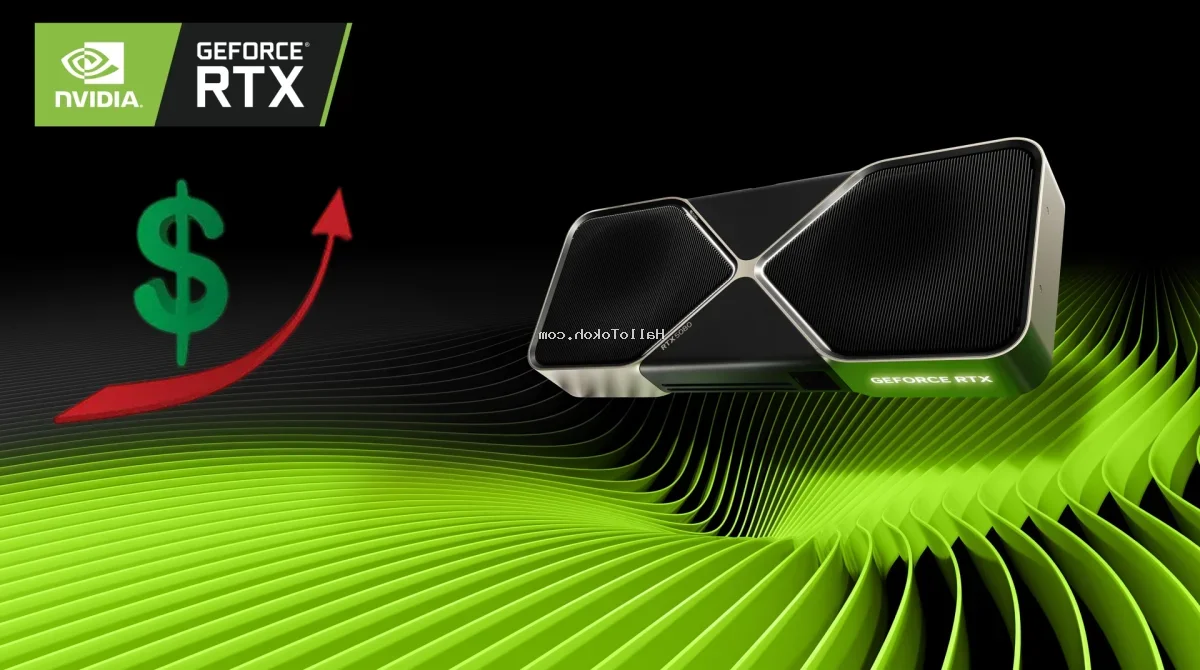
GPU Price Surge 2026: South Korea Faces Hardware Cost Hikes Up To 21%
 HalloTokoh
August 8, 2026 4:56 pm
.
6 min read
HalloTokoh
August 8, 2026 4:56 pm
.
6 min read
HalloTokoh – GPU Price Surge 2026: South Korea Faces Hardware Cost Hikes Up To 21% is a practical summary that keeps things concise and rich in value. Hello guys! Fresh news and updates are always brewing at HalloTokoh.com. Find a nice backrest so your reading time feels extra smooth.
Our main focus today stays right around practical everyday matters. Let’s uncover the cool facts regarding GPU Price Surge 2026: South Korea Faces Hardware Cost Hikes Up To 21% right now. Highly recommended to read all the way through to the end.
Ready to learn something new today? head straight down to catch the full view. Hope this enlightens you!
Poin Utama Berita Ini:
- Intense global demand for artificial intelligence hardware and persistent supply chain bottlenecks starting in late 2025 have triggered a severe spike in memory component costs.
- Hardware inflation has rapidly expanded from basic memory modules to high-end graphics cards, with recent market data from South Korea revealing weekly price jumps of up to 21% between July 31 and August 6, 2026.
- According to reports detailed by Tech4Gamers, if these persistent rising costs continue, high-end PC components will become increasingly unaffordable for mainstream gamers and enthusiasts.
The global technology landscape is currently navigating a profound hardware cost crisis that began taking shape in late October and early November 2025. Dilansir dari laporan yang dibahas oleh Tech4Gamers, worsening market conditions have been heavily driven by unprecedented artificial intelligence infrastructure demands and an increasingly strained global supply chain. Memory shortages quickly initiated a wave of upward pressure, pushing component prices sharply higher across various manufacturing sectors. While the initial financial shock primarily targeted random-access memory modules and NAND flash components—which subsequently caused solid-state drive prices to skyrocket—the destructive economic wave has now officially expanded into the graphics processing unit market.
Recent comparative market tracking data originating from South Korea demonstrates rapid weekly price escalations ranging between 10% and 20% in mere single-week windows. Owning a modern desktop computer or assembling a custom gaming rig today carries a financial burden vastly heavier than it did just one or two years prior. Looking back at historical component pricing, a standard 32-gigabyte kit of DDR5 memory could be acquired for a little over $100, which translates to approximately Rp 1.786.300. However, that exact same memory kit now routinely commands a staggering price tag of $400 or more, which converts to a formidable Rp 7.145.200 under current exchange rates.
The Exponential Rise of SSD and Memory Component Costs
The relentless expansion of artificial intelligence data centers has simultaneously inflated the retail acquisition cost of solid-state drives. Storage drives that historically retailed around the $100 mark—roughly equivalent to Rp 1.786.300—now demand nearly twice that amount in the current consumer market. When building a modern computer system, dealing with inflated RAM and storage expenditures already forces buyers to absorb significantly higher baseline expenses before even considering the cost of a dedicated graphics card.
Adding fuel to this financial fire, detailed graphics card price tracking recorded across South Korean hardware platforms like Danawa between July 31 and August 6, 2026, highlights alarming pricing trajectories that are far from coincidental anomalies. These sudden spikes affect virtually all current-generation graphics processing units on the market, while analysts warn that last-generation hardware will likely experience consequential price adjustments as remaining inventory dwindles.
NVIDIA RTX 50-Series Price Adjustments in South Korea
Examining the specific tier of NVIDIA hardware reveals a steady compounding of costs across the entire product stack. Starting at the absolute apex of consumer performance, the flagship NVIDIA GeForce RTX 5090 registered a notable 5.4% price increase over the course of a single week. Moving down slightly into high-end enthusiast territory, the RTX 5080 witnessed a slightly steeper upward adjustment, climbing by 6.4% within the same tracking period.
Further down the performance ladder, the mid-to-high tier options experienced even more aggressive percentage jumps. The RTX 5070 Ti recorded a 7.7% price hike, while the widely popular RTX 5070 witnessed a dramatic 12.9% surge, marking a notable milestone for NVIDIA hardware inflation. Meanwhile, the 8-gigabyte variants of the RTX 5060 Ti and the standard RTX 5060 faced matching upward pressure, each showing identical price increases of 11.8% during the monitored weekly window.
AMD Radeon RX 9000-Series Market Fluctuations
The competitive landscape offered by Advanced Micro Devices reflects a similarly volatile pricing environment across its latest graphics architecture. The AMD Radeon RX 9070 XT recorded a 6.1% price increase in just one week. Conversely, the standard RX 9070 showed relative stability with a modest growth of slightly more than 1%, while the RX 9070 GRE model increased by less than 3% during the same tracking interval.
Entry and mid-range Radeon cards also displayed stark divergence based on VRAM configurations. The RX 9060 grew by less than 5%, whereas the higher-spec RX 9060 XT saw significant upward movement. Specifically, the 16-gigabyte version of the RX 9060 XT increased by 11.5%, while the 8-gigabyte variant suffered the most dramatic jump of all monitored components, surging by a remarkable 21.2% in a single week.
Comparative Weekly Price Surge Across Popular GPU Models
| Graphics Card Model | Weekly Price Increase (%) | Market Segment |
|---|---|---|
| NVIDIA GeForce RTX 5090 | 5.4% | Flagship Enthusiast |
| NVIDIA GeForce RTX 5080 | 6.4% | High-End Enthusiast |
| NVIDIA GeForce RTX 5070 Ti | 7.7% | Upper Mid-Range |
| NVIDIA GeForce RTX 5070 | 12.9% | Mid-Range Performance |
| NVIDIA GeForce RTX 5060 Ti (8GB) | 11.8% | Mainstream Gaming |
| AMD Radeon RX 9070 XT | 6.1% | High-End Performance |
| AMD Radeon RX 9060 XT (8GB) | 21.2% | Budget / Mainstream |
Broader Implications for Global PC Gamers and Enthusiasts
Whether these continuous price escalations stem primarily from relentless artificial intelligence infrastructure demand or underlying manufacturing supply constraints, the resulting market dynamics place everyday consumers in an extremely challenging purchasing position. Acquiring high-performance gaming hardware has transformed into an expensive endeavor, testing the financial patience of even the most dedicated enthusiasts. If this persistent hardware inflation trend continues unchecked into upcoming production cycles, the latest generation of graphics cards risks becoming entirely inaccessible to mainstream gamers and system builders worldwide.
Disclaimer: Hardware pricing data and market trends discussed in this article are based on regional reports and external analyses. Component costs are subject to rapid fluctuations influenced by global supply chains and economic conditions. For official hardware availability and verified retail listings, please visit trusted manufacturers like NVIDIA or electronic marketplaces such as Amazon.
Referensi Sumber: Tech4Gamers – GPUs Prices Jump By Up to 21% In South Korea, With More Countries Expected to Follow
Hopefully, this casual conversation about GPU Price Surge 2026: South Korea Faces Hardware Cost Hikes Up To 21% shed some light. In the end, it all comes down to put these ideas into practice, guys. There’s no harm in giving it a try starting today, right?
Come on and join the discussion in the box below, guys! fill up the discussion box below with your best opinions. Your comment will be greatly appreciated at HalloTokoh.com.
Our writer is signing off for now, folks, may all your plans go smoothly. Enjoy your day!
Editorial Team: HalloTokoh.com Team
Author: Mss. Mafa